May 21, 2013

Choosing Your Butter Wisely

photo credit: word of wisdom

Butter has gotten a bad rap in recent years. I used to cringe when my toddler would want to eat butter all by itself. Recently, I caught myself happily handing it over to my littlest “butter-demander”. Why?  I look at butter in a whole new light.

Butter can be good for you!  It’s a source of fat-soluble vitamins like A, D, E and K and it contains important trace minerals like magnesium, zinc, chromium, selenium and iodine.

What about the fat?

Fat, despite what we’ve been taught through the years, is actually very necessary for our bodies.  Good fats are essential to developing a healthy brain.  You want to eat the right kind of fat, of course, and if you choose butter wisely, it counts!   Read more about Taking the Fear Out of Eating Fat from the Weston A Price foundation.

Margarine is actually full of unhealthy fats, and margarine-eaters have twice the rate of heart disease as butter-eaters!  (Nutrition Week, March ’91)

Choosing a brand of butter at the store, as with most products these days, can be a challenging experience. We definitely aren’t lacking in choices, yet how does one even start in finding a healthy brand?

In my opinion, the easiest way to choose a healthy butter in the store is to choose one with the fewest ingredients. Some brands will have an ingredient list over 15 items long! Some have a refreshingly simple ingredient list: sweet cream, salt. Ahh.

You also want to choose butter that is hormone, steroid, and antibiotic free.   The Organic Consumers Association has a list of the brands that are hormone-free, like Brown Cow.

Even better would be to choose organic butter from grass-fed cows.  Better still would be fresh butter, made from fresh raw cream!  If we have our own cow someday, I will definitely be whipping up my own butter!

GMO’s in Food Affect Your Genes

image credit: Wikipedia

The term GMO is tossed around a lot these days, especially in the healthy food world.  What is a GMO and why are more and more people saying we need to avoid them?

GMO’s are genetically modified organisms and they are made by combining DNA (genes) from different organisms.   I think this technology is fascinating and has lots of exciting applications, particularly in medicine, but in our food is NOT one of them!

At a molecular level, our body absorbs the GMO’s that we eat in our food.   These GMO’s can do all sorts of things inside our bodies that we have almost no knowledge about.   For example, a recent article from Discover Magazine explains how mRNA from rice negatively affects our cholesterol levels.    In essence, mRNA in cells from rice lowered receptor levels in our cells that, in turn, increased our LDL (bad) cholesterol levels.  Who knew?  This example is only the tip of the iceburg in terms of the effect genetically modified foods are having on our DNA.

Why the push for GMO’s?   Among other things, proponents of genetically modified foods say that genetic engineering will increase crop yield and be the solution to the world’s hunger problems.   A heartbreaking article in the Huffington Post reveals just the opposite as it tells the story of how over 200,000 Indian farmers have commited suicide because of crop failure due to GE seeds.

70% of our processed foods now contain GMO’s.  To avoid GMO’s, look for a GMO-free label or buy organic.  I have started buying only organic bread, for example, because SO much of the wheat grown in the US is genetically modified.  Thankfully, Costco has a great organic sprouted wheat bread – check it out if you live near a Costco!

You can influence change in a couple of key ways.  We vote with our dollars, so each time you choose a GMO-free product, you’re sending a message to the corporations that you want GMO-free food!  Various non-profits are waging war on the food industry by campaigning for truth-in-labeling and for keeping our organic foods GMO-free!  Sign these petitions and email your Congressional representatives, sharing your views and opinions on your food supply.   We can make a difference together!

Join us at Food Renegade & Monday Mania!

Blessed are the Beekeepers Review & Giveaway!

I’m really excited to introduce you to Blessed [are the] Beekeepers!

Blessed [are the] Beekeepers is a locally owned beekeeping business in Mobile, AL.  Owner Mark Renn maintains multiple bee hives at community gardens in the West Mobile area. They offer a variety of products from honey and beeswax lip balm to dried spice mixes, jams and pickled items (such as jalapenos, banana peppers and pickles).

Mark sent me some lip balms and soaps to try out and I love them!  The lip balm is really moisturizing and smells good.  I love that it’s made with all-natural ingredients and by a small business owner.  His prices are fantastic too – soaps are only 75¢/oz!   Mark also makes custom flavors and labels – these could be a great fundraiser!

Mark has generously offered to do a giveaway for Renaissance Mama readers!  Follow the instructions in the Rafflecopter below and you could win a honey bear full of fresh, local honey, 3 lip balms, and several soaps.  The giveaway will run through 12:01 am on Saturday, so enter soon!

[Read more...]

Organic Vs Natural – Do You Know the Difference?

image credit: woodbine farmers market

That’s a pretty-looking label, but do you know what it means?

Absolutely nothing.

It’s just marketing hype.  Consumers are waking up to what’s been happening to our food, and are wanting to make healthier choices.   The big companies know this, and so they’re beginning to label things “natural”, no matter what they are.

The “natural” label is not subject to any federal regulation, and so companies can put it on any product that they choose.  That includes foods that are full of GMO’s (genetically modified foods) and growth hormones.

The “organic” label, on the other hand, means a lot.  (For now.  GMO’s are beginning to contaminate organic crops and some of the bigger organic companies are giving ground to Monsanto, the ginormous GMO seed company.  Read more here about Whole Foods’ capitulation.)

An organic product must be free of GMO’s, pesticides or chemicals, and anything artificial.

While eating organic can be expensive, I find that if I stay away from processed foods, then my grocery bill goes down considerably.  For example, if I buy a box of Annie’s crackers, I’ll spend $3.99 or so on a box that’s gone in a couple of days.  Or, I can buy a tub of organic applesauce (or make my own at home from organic apples), dry them in my oven or dehydrator, and make fruit leather.  That snack will last a lot longer, and is much healthier for us!

You can read more about saving money and eating organically here.

My recommendation – skip the “natural” products and save your food dollars for organic products.

Join us at Food Renegade!

Tropical Traditions Coconut Oil Review & Giveaway!!!

Tropical Traditions recently sent me a jar of coconut oil to review – and one to give away!  So stay tuned at the end of this post to learn how to win your own jar!

I am a relative newcomer to coconut oil and have to admit that I was slow to try it out simply because I don’t like the taste of coconut.  (Actually, I think what I don’t like is the coconut that comes in the blue bag that also has propylene glycol in it!!  Maybe it’s fake coconut?)

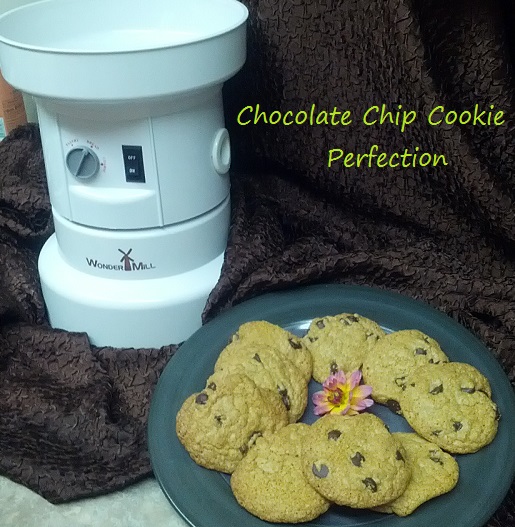
Anyway, coconut oil has been fabulous all the way around!  It only has a mild coconut taste, and I’ve been able to substitute it in recipes for butter and oil with only pleasant results.  I used it in a chocolate chip cookie recipe last week instead of butter, and the cookies were wonderful!  My family and my neighbors devoured them!

I also used it to make deodorant.  I’d been wanting to try making my own for a while, and Tropical Traditions offered me the perfect opportunity!   We’ve been really happy with it and it’s stayed a nice solid consistency in our bathroom.  (Coconut oil melts in the heat, so I may need to keep the deodorant in the fridge during our Texas summers!)  My husband tends to be an opinionated reviewer of my “experiments” and this one has his stamp of approval.

My husband will eat it straight out the jar as well, just for the nutrients!   “Research shows that the medium chain fatty acids found in coconut oil boosts the body’s metabolism, raises body temperatures, and helps provide greater energy which can lead to weight loss.”

I love finding a product that’s so versatile.  I’ve been intentional about trying to simplify my life lately, and coconut oil is a great fit for that.

If you’d like to win a free jar of your own, enter in the Rafflecopter below!  The giveaway is open until Friday at midnight!

[Read more...]

What Did Your Dinner Have For Dinner?

What did your dinner have for dinner?

The answer to that question might be more important than you think. If your dinner meat came from a conventional store, and from a conventional farm, you might prefer to not know the answer.

Jon Taggart, a Texas farmer, described for the Time Magazine how he used to raise his cattle.

[Taggart] crowded his cattle onto pasture sprayed with weed killers and fertilizers. When they were half grown, he shipped them in diesel-fueled trucks to huge feedlots. There they were stuffed with corn and soy–pesticide treated, of course–and implanted with synthetic hormones to make them grow faster. To prevent disease, they were given antibiotics. They were trucked again to slaughterhouses, butchered and shrink-wrapped for far-flung supermarkets. “It was the chemical solution to everything,” Taggart recalls.

Sometimes, cattle are even fed parts of other cows, dead horses, chicken manure, and more.  Barf.

Now, Taggart has completely changed his operation.

“He has restored his 1,350 acres in Grandview, Texas, to native tallgrass prairie, thus eliminating the need for irrigation and chemicals. He rotates his cattle every few days among different fields to allow the grass to reach its nutritional peak. And when the steers have gained enough weight, he has them slaughtered just down the road. Finally, he and his wife Wendy dry-age and butcher the meat in their store, Burgundy Boucherie. Twice weekly, they deliver it to customers in Fort Worth and Dallas.”

Sounds good to me!

Being selective about the source of your meat could yield you a slew of health benefits and save you money in doctor bills in the long run! Research shows that eating grass-fed beef instead of grain-fed would yield a weight loss of 6lbs over a year, even if nothing else changed. Grass-fed beef has about the same fat ratio as fish does, making it a healthy choice for dinner!

Plus, when you choose organic, grass-fed beef, you are saying goodbye to pesticides, hormones, and antibiotics that only cause damage to our bodies.

When you’re shopping for meat, be careful to look for grass-fed, and not just organic. It’s best if you can get your meat locally.  If you’re in the DFW area, I can recommend a great co-op with excellent prices!

Choose grass-fed and you can enjoy your steaks or burgers with no remorse.  :)

Join us at Monday Mania & Frugally Sustainable!

Have you tried Kombucha? Plus Get Started Making Your Own

A kombucha craze is sweeping the nation. These bottles are popping up even in grocery stores like Kroger, and more and more people are jumping on the band wagon. I am not a fan, but my husband and kids both really like it. Have you tried it?

What is kombucha, anyway?   According to Wikipedia, kombucha’s recorded history began in the late 1800′s in Russia.  It aids in detoxification, increases energy levels, and has indications of being instrumental in curing cancer.  If you’d like to read more about the history of kombucha, take a look at the article on Food Renegade.

Kombucha is made from sweetened tea that is fermented with a mushroom culture, called a SCOBY.   SCOBY stands for symbiotic colony of bacteria and yeast.

Store-bought kombucha can be rather pricey (upwards of $3.99 a bottle).  Thankfully, you can make your own without too much trouble.   To start, you’ll need a SCOBY.  You can get one from a friend, from Cultures for Health, or you can grow your own.

How to Grow your own SCOBY

To grow your own SCOBY, simply leave about 1/8 of a bottle that you bought from the store.  It’s preferable to use an unflavored version.  Cover it with a rag to keep any bugs out, and stick it in a cool, dark place for a while.  Like several weeks.  I used the top of my refrigerator.  (That way, I didn’t forget about it forever).

After several weeks, you should have a nice mass called a SCOBY.  The SCOBY will reproduce itself with every batch of kombucha that you make, so you will soon have plenty of SCOBYs.  Enough to share with your friends to save them the growing process.

So, start growing your SCOBY’s, and check back here in a month or so for instructions on what to do next!

Join us at Monday ManiaReal Food ForagerFrugally Sustainable, & Real Food, Low Cost!

* These statements have not been evaluated by the FDA. These products are not intended to diagnose, treat, cure or prevent any disease.

Chick-fil-a Debuts Healthier Kids’ Meal

When you’re on the road with kids, or just out running errands, sometimes you need food NOW.  Chick-fil-a just released a press release about their new, healthier kid’s meals.  It’s still not as good as a home-cooked meal from organic, free-range chickens cooked with a healthy oil instead of GMO-laden canola oil.  But when you need food, you need food.  And Chick-fil-a’s choices are better than most.

Their new options include grilled chicken nuggets, Buddy Fruits, and an elimination of any drinks with HFCS in them.  Definitely steps in the right direction!

Read the rest of their press release here.

Make-Your-Own All Natural Soda Alternative

Most of us know that soda is bad for us.  Calcium leeching from our bones, too much sugar, that kind of thing.  And most of us drink it anyway.  I’ve shared before how Coke was one of the hardest things for me to give up.

The drink you see in the glass above is a healthy, all-natural, carbonated alternative that I make at home!  It takes about 5 minutes a day to set up a new, quart-size batch.  I can also flavor it all sorts of ways, so no two are just alike.  My husband loves it and drinks about a quart a day.

Water kefir is a fermented beverage filled with probiotics.  Probiotics are vital because a whopping 80% of our immune cells reside in our gut!  Kefir is an excellent way to keep our immune system strong.

Water kefir is made from water kefir grains, pictured below.  (Sorry they’re a bit difficult to see.)

I obtained my kefir grains on ebay, but you can also get them from Cultures For Health, or from a friend.  You can use the kefir grains over and over again, so it’s incredibly budget-friendly.

To make water kefir:

1. Heat about 1/2c filtered water on the stove.  Dissolve about 1/4c organic sugar in the water and let cool.  (Hot water will kill the kefir grains.)

2. Combine 1t molasses, juice from 1/2 a lemon, and the sugar water in a quart jar.

3. Fill up the rest of the jar with filtered water.

4. Add kefir grains and put the lid on the jar.  Allow to ferment for 24 hours or so on your counter-top.  It becomes less sweet the longer you allow it to ferment.

First ferment

Second ferment: Now is your opportunity to flavor your kefir.  There are SO many different ways to flavor kefir.  I’ve only played with a couple so far.  Feel free to experiment!

1.  Strain out water kefir grains and repeat steps for the first ferment to start another batch.

2.  Add 1 tsp of vanilla if you’d like cream soda water kefir, or add blueberries, raspberries, or whatever sounds good to you.

3. Close the lid on your jar and allow it to ferment for another 12 hours on your counter-top.   After this point, I move it to the refrigerator so we can drink it cold.  It will probably be carbonated by this point, but that doesn’t always happen.

fermenting with blueberries

Enjoy your new, good-for-you alternative to soda!

Have you tried water kefir?  What are your favorite ways to flavor it?

Join us at Monday ManiaMakeityourself Monday, Fat TuesdayFrugally Sustainable, and Natural Mothers!

Check out my guest post at Frugally Sustainable!

I’m excited to be a guest poster today over at one of my favorite blogs, Frugally Sustainable!

Today, I’d like to share my story with you in hopes that it will inspire and encourage you!
As we’ve been on our journey towards living a healthier, more natural lifestyle, I’ve been excited that our need for the grocery store (and other stores) has drastically reduced!

You see, I used to be a super coupon clipper. Every Sunday, I would eagerly dash down the stairs of my apartment to get the latest paper, and comb through the inserts. Then I’d pull up my grocery store match ups and make my list of all the items I was going to get a great deal on. A trip to the store soon followed, and I had a blast sharing all my great deals with my husband! It was such a rush saving over 76% on food items!

The problem came when I began to learn about the lack of nutrition in the vast majority of what I was buying. Boxes of breakfast cereal and pre-made meals didn’t translate to a healthy diet. My husband struggled with allergies and I became seriously overwhelmed after he came home from an allergist visit with a LONG list of foods he was allergic to.

Check out the rest of my post HERE.

Related Posts Plugin for WordPress, Blogger...